


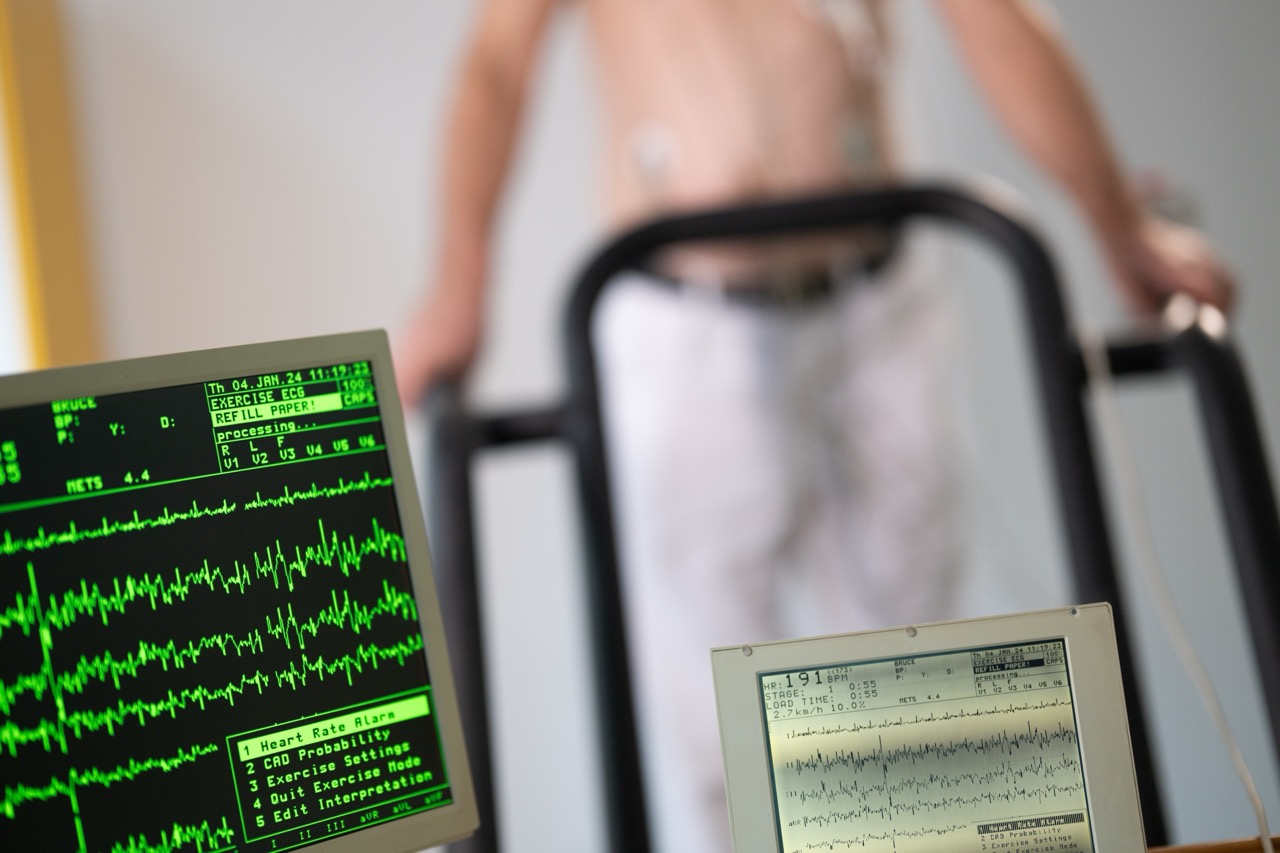
February is Heart Health Month — a time dedicated to raising awareness about the importance of caring for your heart. One of the most common diagnostic tools cardiologists use to evaluate heart health is a stress test.
A stress test typically takes 45-60 minutes and measures how well your heart performs under physical stress. This usually involves walking on a treadmill with gradually increasing speed and incline, known as an Exercise ECG. However, there are several types of stress tests, which we outline below.
Preparing for Your Stress Test
Prior to your test, you may be asked to avoid caffeine, tobacco and certain medications for about 24 hours. It’s also recommended you avoid eating a large meal beforehand.
Be sure to wear comfortable clothing and athletic shoes so you aren’t hindered in your ability to walk on the treadmill.
During Your Stress Test
To monitor your heart, electrodes will be placed on your chest to record your heart rhythm and a blood pressure cuff will be placed on your arm. Medical staff will monitor your heart rate and blood pressure throughout the test.
Your Test
The active portion of the test typically lasts about 15 minutes. You’ll begin walking at a slow pace, with the speed and incline gradually increasing every few minutes. The test will end when you reach your target heart rate, feel too fatigued to continue or experience symptoms such as dizziness, shortness of breath or chest pain.
After Your Stress Test
You’ll complete a short, supervised cool-down period to help bring your heart rate down slowly. Your doctor will review and interpret the results, then discuss whether there is any cause for concern or if your results fall within normal limits.
Other Types of Stress Tests
- Stress Echo: uses ultrasound to evaluate heart muscle function before and after exercise.
- Nuclear Stress Test: uses a radioactive tracer (an injectable dye) and imaging to assess blood flow to the heart and identify potential blockages.
- Pharmacological Stress Test: for patients unable to exercise, medication is administered to simulate the effects of exercise while the heart is monitored.
If you have a history of heart disease, a stress test may be recommended every one to two years. If you develop new symptoms, your cardiologist may order a test to rule out concerns.
Stress tests play an important part in protecting your heart health. Identifying potential issues early can help detect coronary artery disease, uncover abnormal heart rhythms and assess your risk of future heart attacks.
Southwoods Cardiology offers advanced screening technology and comprehensive care for a wide range of heart-related conditions. To learn more visit SouthwoodsHealth.com.