


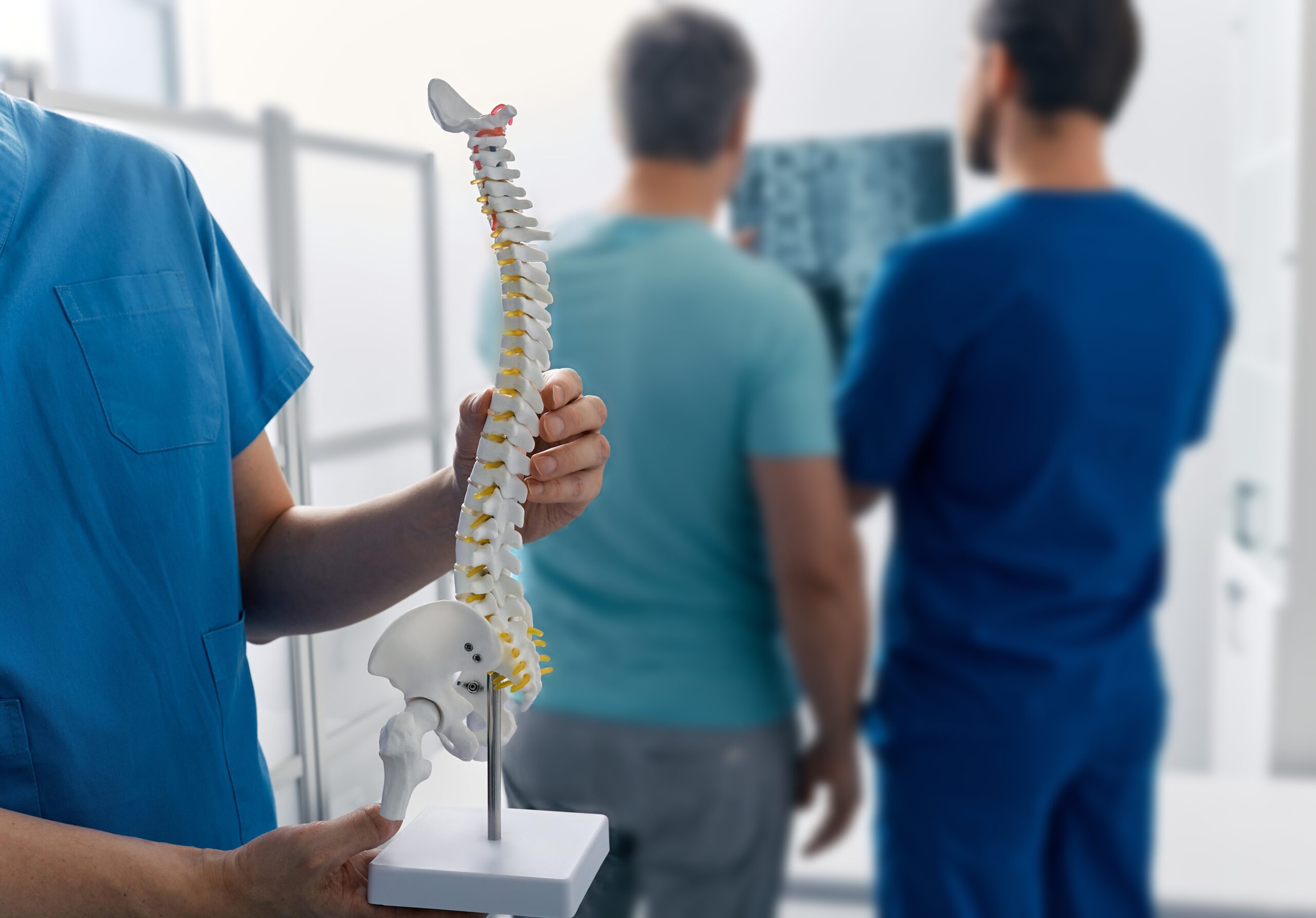
Physical therapy is one of the most effective, non-surgical options for managing scoliosis, helping patients reduce pain, improve posture, strengthen the muscles that support the spine and maintain a better quality of life.
Every June, National Scoliosis Awareness Month strives to spread awareness about the condition, the merits of early detection and the benefits of proactive treatment. At Southwoods Health, our physical therapists work closely with patients of all ages to build personalized treatment plans that address each person’s unique needs.
If you or a loved one has been diagnosed with scoliosis, or if you have been living with back pain and wonder if your spine may be a factor, this is a good time to learn what physical therapy can do for you.
What Is Scoliosis?
Scoliosis is an abnormal sideways curvature of the spine that can range from mild to severe. It affects an estimated 2 to 3 percent of the population, or approximately six to nine million people in the U.S. While it’s most often associated with children and teenagers, scoliosis is not exclusively a childhood condition. Studies exploring scoliosis in adults report rates of between 12 and 20 percent and the rate of scoliosis actually increases with age.
Types of Scoliosis
- Adolescent idiopathic scoliosis (AIS) – The most common form, typically diagnosed between ages 10 and 15. The cause is not fully understood.
- Degenerative scoliosis – Develops in adults, often due to age-related changes in the discs and joints of the spine.
- Neuromuscular scoliosis – Associated with conditions such as cerebral palsy, muscular dystrophy, or spinal cord injury.
- Congenital scoliosis – Present at birth due to abnormal spinal development.
Signs to Watch For
Scoliosis does not always cause pain, especially in its early stages. Common signs include:
- Uneven shoulders or shoulder blades
- One hip appearing higher than the other
- A visible curve in the spine when bending forward
- Uneven waistline
- Back pain or stiffness, particularly in adults
As scoliosis progresses, the spine gets increasingly rigid, which can make it less responsive to treatment. That’s why early detection matters and why routine screening and awareness are so important.
How Does Physical Therapy Help With Scoliosis?
Physical therapy does not eliminate a spinal curve, but it plays a significant and well-documented role in managing the condition. For many patients, a structured physical therapy program is the foundation of their scoliosis care plan, often used alongside bracing or as a long-term management strategy after treatment.
Here’s what physical therapy can meaningfully address:
Improving Posture & Spinal Alignment
A physical therapist will assess how your posture is affected by your curve and develop targeted exercises to help counteract those compensations. Over time, postural training helps patients carry themselves in a way that reduces strain on the spine and surrounding structures.
Strengthening Core & Back Muscles
The muscles surrounding the spine, particularly the deep core muscles, play a critical role in supporting spinal stability. Scoliosis can cause muscle imbalances on either side of the spine. Physical therapy targets these imbalances through specific strengthening exercises, helping to better support the spine and reduce the workload placed on affected structures.
Reducing Pain & Discomfort
Back pain is one of the most common complaints among adults living with scoliosis. Physical therapy uses a combination of therapeutic exercise, manual therapy, and movement education to address pain at its source, not just manage symptoms. Many patients experience meaningful improvements in day-to-day comfort with a consistent PT program.
Improving Flexibility & Range of Motion
As scoliosis progresses, the spine can become increasingly rigid, making it more difficult to perform certain therapeutic exercises. Starting physical therapy early and maintaining it consistently, helps preserve spinal flexibility and keep the body moving well. Stretching and mobility work are a standard component of most scoliosis PT programs.
Supporting Breathing & Lung Function
In more significant curves, the shape of the thoracic spine can affect rib cage mechanics and, in turn, breathing capacity. Specific breathing exercises and techniques are often incorporated into physical therapy programs for thoracic scoliosis to help patients breathe more efficiently and comfortably.
What to Expect
Starting physical therapy for scoliosis begins with a thorough evaluation. Your physical therapist will review your diagnosis, imaging, medical history, and current symptoms before building a plan tailored specifically to you. No two scoliosis cases are alike, and treatment should reflect that.
A typical course of physical therapy for scoliosis may include:
- Initial evaluation – Posture assessment, movement screening, strength and flexibility testing, and a review of your spinal curve characteristics
- Individualized exercise program – Targeted strengthening, stretching, and postural exercises based on your curve pattern and functional limitations
- Manual therapy – Hands-on techniques to address soft tissue tension, joint mobility, and pain
- Breathing and body awareness training – Techniques to improve thoracic mobility and breathing mechanics where applicable
- Home exercise program – Guidance on exercises to continue between sessions to reinforce progress
- Progress monitoring – Regular reassessment to track improvements and adjust the plan as needed
Frequency and duration will vary depending on the severity of your condition, your age and your goals. Your physical therapist will set realistic expectations and keep you informed throughout the process.
Physical Therapy Compared to Other Scoliosis Treatments
Physical therapy is often used in combination with other treatment approaches. Here is a brief overview of where it fits within the broader scoliosis care landscape:
| Treatment | Best Suited For | Role of Physical Therapy |
| Physical Therapy | Mild to moderate curves, adult scoliosis, post-surgical rehab | Primary treatment or complement to other care |
| Bracing | Growing adolescents with moderate curves | PT used alongside bracing to maintain strength and flexibility |
| Surgery
(Spinal Fusion) |
Severe curves or those failing to respond to conservative care | PT is critical for post-surgical rehabilitation and recovery |
For many patients, particularly adults managing degenerative scoliosis, physical therapy is the primary and ongoing treatment approach. Conservative non-surgical treatment is more effective the sooner it’s started, and early diagnosis and intervention expand what can be achieved without surgery.
When Should You See a Physical Therapist for Scoliosis?
You don’t need to wait for severe symptoms to benefit from physical therapy. Consider physical therapy if:
- You have recently been diagnosed with scoliosis and want to understand your options
- You have a known spinal curve that has never been formally addressed with PT
- You are experiencing back pain, stiffness or postural changes you suspect may be related to your spine
- You are an adult noticing new or worsening back issues as you age
- You are recovering from scoliosis surgery and need guided rehabilitation
- Your child has been diagnosed with AIS and their care team has recommended conservative management
A physical therapist at Southwoods Health can evaluate your condition, answer your questions and help you understand the most appropriate next steps, whether that’s a dedicated PT program, a referral to one of our orthopaedic or spine specialists or a combination of both.
Physical Therapy & Rehabilitation Services at Southwoods
Southwoods Health offers Physical Therapy & Rehabilitation Services in Austintown, Boardman, Calcutta, Howland and Youngstown, serving patients throughout the Mahoning Valley. Our physical therapists take a personalized, one-on-one approach to care, building treatment plans around the individual.
One of the key advantages of receiving care at Southwoods is the ability to coordinate across specialties when needed. Physical therapists work closely with orthopaedic surgeons and spine specialists within the Southwoods network, so if your care needs extend beyond PT, getting to the right provider is seamless. You won’t have to start over or re-explain your history. Your care team communicates, and your treatment stays connected.
Whether you are newly diagnosed, managing a long-standing condition, or recovering from surgery, Southwoods’ physical therapists are here to help you move better, feel better and live more comfortably.
This Scoliosis Awareness Month, take the opportunity to learn more about how physical therapy can make a difference. Whether you are managing a recent diagnosis or have been living with scoliosis for years, the right care, started at the right time, can change how you feel every day. Southwoods Health physical therapists are here to help you take that next step.
Learn more about Southwoods Physical Therapy & Rehabilitation Services.
Watch This Blog: